Reading the strategy boundary with discipline
Strategy writing is where the desk draws the line. Legal play is the discipline of reading the discard pile, completing sequences in priority order, and managing the chip count. Promised earnings are not strategy. The desks below are the reading.
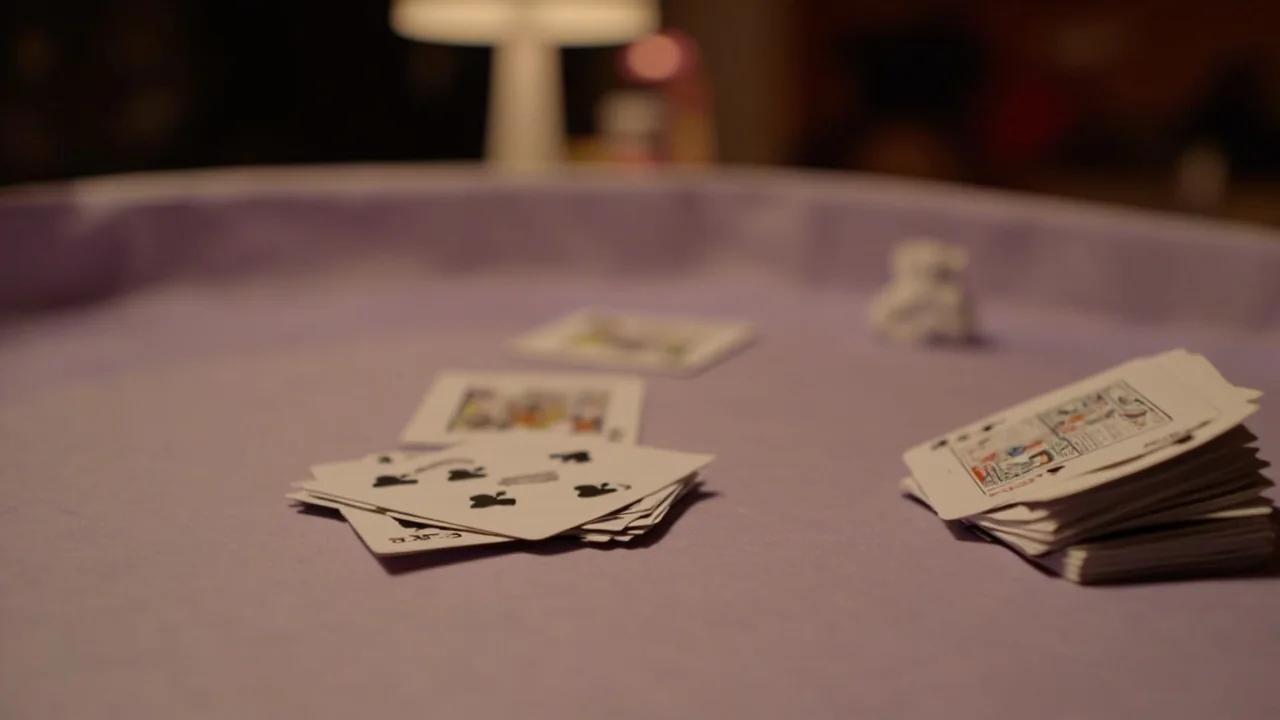
Reading the discard pile
A discard pile is the table's reading list. Each card tells a story about the player who discarded it.
The most common use of the discard pile is to read what an opponent has discarded. A card discarded early in the round is unlikely to be in a strong hand. A card discarded late is more likely to be surplus or matched already.
The second use is to read what the opponent still needs. A player who picks up a 7 of hearts from the open deck and immediately discards a 7 of clubs has likely completed a sequence or a set. The reading is to remember which 7s are still in circulation.
The middle-seat reading
When you sit in the middle of the turn order, every discard between your two turns is visible. Use the middle seat to read the table. The middle seat is the most informative position. A player who can read the middle seat is closer to the game than one who can't.
Building the first pure sequence first
The first pure sequence is the spine of a declaration. The other melds are decoration. The reading is on the spine.
The first pure sequence is the only mandatory meld. The reading is that without it, no declaration is possible. The first pure sequence is built from the closed deck's draws or from the cards already in the hand. The choice is between building with the larger suit and building with the suit that has more help from the wild joker.
When the wild joker is a 7 and the hand has both 7♥ and 7♠, the joker can substitute for an 8 in a 5-6-7 sequence or a 9 in a 7-9-10 sequence. The reading is that the wild joker is most useful when it sits in a sequence rather than a set, because sequences are the mandatory melds.
The second pure sequence
The second pure sequence is needed for a clean declaration. It is built from the remaining cards. The reading is to construct second pure sequences in suits that have already shown promise. A second pure sequence in a different suit gives the hand flexibility.
The discipline of holding jokers
A joker is a free card. The reading is to hold it for the right moment, not to play it on the first available meld.
The wild joker is a substitute for any card in a meld. The printed joker is a substitute for any card in a meld, plus carries a twenty-five-point penalty if unmatched in the loser's hand. Both jokers are powerful cards. The reading is to hold them for the right moment.
A joker in a pure sequence is more valuable than a joker in a set. The pure sequence is mandatory. A joker in a pure sequence allows the rest of the hand to be built without it. The reading is to prioritize the joker for the pure sequence first.
Holding to the last card
Some players hold a joker to the last card for the largest possible meld. The reading is that this is a high-risk strategy. The joker in the last card means the joker is in the deadwood if the player is the loser. The reading is to use the joker early and often, not to hold it for the perfect meld.
The boundary between legal play and marketing
Strategy writing on the desk is the discipline of legal play. The boundary between legal play and marketing claim is worth drawing on the page.
Building sequences, holding jokers, and reading the discard pile are legal play. The reading is on the cards, the table, and the format. No promise is made.
A claim that a particular platform, a particular session, or a particular strategy guarantees earnings is a marketing claim. The reading is to treat it as such.
The desk publishes strategy desks because the discipline is worth reading. The desk does not publish tips that promise earnings, recoveries, or guaranteed wins.
Continue with the platform reviews
The next read is the platform comparison ledger: four rummy platforms, four readings, and the desk's list of gaps that warrant attention.
Reading the strategy desks in detail
The strategy desks are the desk's reading-room strategy columns. The reading is on the affected page, the strategy column, and the next edition.
The strategy desks are the desk's reading-room strategy columns. The reading is on the affected page, the strategy column, and the next edition. The strategy desks are updated with each edition. The reading is on the strategy column, the strategy column's page, and the strategy column's editor.
The strategy desks are the desk's first read. The reading is on the affected page, the affected column, and the affected strategy. The reading is on the page, the format, and the edition.
Reading the column
The column is the first field of the strategy desk entry. The column is the strategy's name. The reading is on the column, the column's focus, and the column's date. The column is the first read.
Reading the focus
The focus is the second field of the strategy desk entry. The focus is the strategy's dimension. The reading is on the focus, the focus's rule, and the focus's citation. The focus is the second read.
Reading the date
The date is the third field of the strategy desk entry. The date is the publication date. The reading is on the date, the date's edition, and the date's section. The date is the third read.
The strategy desks are the desk's reading-room strategy columns. The reading is on the column, the focus, and the date. The reading is on the page, the format, and the edition. The reading is short for a reason — the strategy desks are on the page.
The image on the left is the desk's reading-room visual for this section. The composition is editorial cutout — the prop is isolated on a pale lilac paper surface, with a thin pink rule below the caption. The reading is on the visual, the caption, and the section.
Continue with the platform reviews
The next read is the platform comparison ledger: four rummy platforms, four readings, and the desk's list of gaps that warrant attention.